The Pickleloonies 2026 paddle buying guide (for your first or fifth paddle)
How to pick a pickleball paddle in 2026 — weight, core, face, grip, and the real differences between $80 and $250.
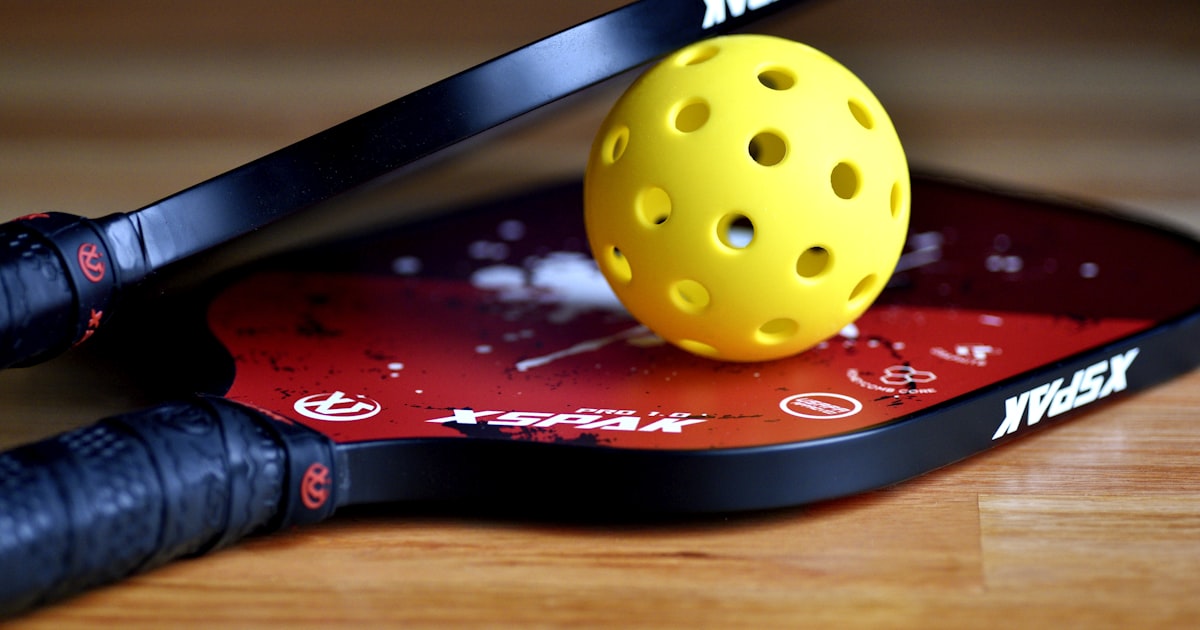
Picking a pickleball paddle in 2026 is more confusing than picking a phone. Carbon fiber, polymer core, thermoformed edge, raw vs grit face, USA Pickleball approved, MLP-approved, MLP-banned-then-reapproved. Here's how to cut through it — what actually matters and what doesn't.
The four variables that matter
Ignore the marketing. Four variables decide how a paddle plays:
- Weight — biggest single factor. 7.5 oz (light, control, slow swing) through 8.5 oz (heavy, power, tires you out).
- Core thickness — 13 mm (control, dwell-time, less pop) vs 16 mm (more pop, less control). Both legal. 13 mm is the 2026 default at the pro level.
- Face material — carbon fiber (spin, control) vs fiberglass (pop, power) vs hybrid.
- Grip size — 4 inch (smaller hand) vs 4-3/8 inch (most players) vs 4-1/2 inch (large hand). Wrong grip causes tennis elbow.
Everything else (handle length, paddle shape, "thermoformed edge") matters less than these four. Don't let a salesperson tell you otherwise.
Power vs control — which kind of player are you
The single best filter for buying:
- You like to drive third shots and counter-attack at the kitchen → power paddle. Heavier (8.0–8.3 oz), 16 mm core, fiberglass or hybrid face.
- You like to dink and reset → control paddle. Lighter (7.6–7.9 oz), 13 mm core, carbon fiber face.
- You're a beginner and don't know yet → middle. 7.9–8.0 oz, 13 or 16 mm, hybrid face. You'll figure out your style over the next six months and can re-buy then.
Don't try to optimize for both. Power paddles play badly in dink rallies; control paddles get muscled around on drives.
The $80, $150, $250 tiers
Realistic state of the market in 2026:
$80 tier — entry brands like Selkirk SLK, ProKennex Black Ace, JOOLA Essentials. Honest paddles. Slightly heavier than top-tier. Faces wear faster (8–12 months). Fine for first paddle, fine for casual play.
$150 tier — the sweet spot. Selkirk Vanguard, Paddletek Tempest Wave Pro, Engage Pursuit. Top-tier face technology, durable, used by 4.0–5.0 rec players everywhere. This is what I'd recommend for 80% of buyers.
$250 tier — Joola Pro IV, Selkirk Power Air, Paddletek Bantam TS. Marginal gains over the $150 tier. Buying these in 2026 is partly buying the pro-tour aesthetic. Worth it if you're 4.5+ and play 4+ times a week.
Trying before you buy
Almost every pickleball-specialty shop runs a demo program. $20–$30 deposit, take a paddle home for a week, swap for a different one. Use it.
The demo experience teaches you things the spec sheet can't:
- Whether the grip feels right after 90 minutes (not after 5 minutes in the shop)
- Whether the weight tires your shoulder over a full session
- Whether the face actually grips the ball enough to put real spin on a serve
- Whether you like the sound (this matters more than you think — some paddles sound like a baseball bat, some sound like a tennis racket)
The paddle-demo step is the difference between a $150 paddle you love and a $150 paddle that sits in the closet.
When to upgrade
Three signals it's time:
- You've played the same paddle for 12+ months. The core has compacted, the face has worn. You're playing with less paddle than you think.
- Your game has shifted. You started as a beginner with a control paddle; now you drive every third. Time to switch to power.
- Your wrist or elbow aches. Almost always weight or grip size. Switch one of them and the pain often vanishes.
For deeper specs and side-by-side comparisons, the Pickleloonies paddle directory tracks current-market paddles. The USA Pickleball approved paddle list is the authoritative source for tournament legality. And the glossary defines the spec terms in case anything above tripped you up.
Frequently asked questions
+What's a good first paddle?
Anything in the $80–$120 range with a mid-weight rating (7.7–8.0 oz). Brands like Selkirk SLK, JOOLA Essentials, and Paddletek Tempest Wave are solid starting points. Don't agonize — your second paddle will inform your style more than your first.
+Does paddle weight matter?
More than core, more than face, more than handle. A heavier paddle (8.3+ oz) gives power but tires the wrist. A lighter paddle (7.5–7.8 oz) gives control but reduces drive depth. Most rec players land at 7.8–8.0 oz.
+Carbon fiber vs fiberglass face?
Carbon fiber gives more spin and a duller pop — better for control players. Fiberglass gives more pop and a brighter sound — better for power. Most 2026 mid-tier paddles use a hybrid surface that splits the difference.
+How long does a paddle last?
12–18 months of regular play for most players. The core compacts over time (you'll feel the pop fade), and the face wears smoother (less spin). Tournament players replace every 6 months.
+Are expensive paddles worth it?
Above $200, the gains are marginal for under-4.0 players. Above $250 is mostly about brand premium and pro-tour replication. Spend it if you want to, but don't expect your game to jump.