Dinking fundamentals: how to win the kitchen battle at 3.0–3.5
Dinking is the rec player's leak. Here's how to fix grip, footwork, and target zones to win the kitchen at 3.0–3.5.
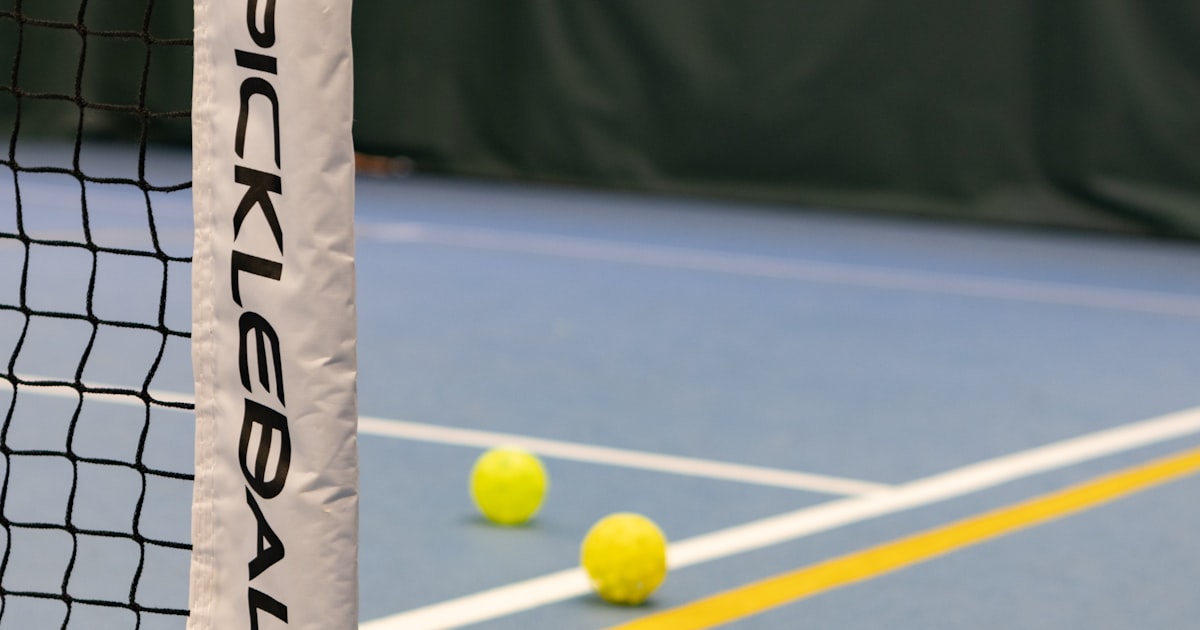
If you're stuck at 3.0–3.5, the leak is almost always at the kitchen. You can hit a serve, you can return, you can drop. But the dink rally — the 10-shot exchange that decides the point — collapses. Here's how to fix it.
The grip and the shoulder
Two things almost every 3.0–3.5 player gets wrong at the kitchen:
- They grip too hard. A tight grip transfers force into the ball. Force = popup. Loose grip = soft contact = controlled landing.
- They use the wrist or the arm. A wrist-snap dink is unpredictable. An arm-swing dink is too powerful. The dink should come from the shoulder, with the wrist and elbow stable.
Hold the paddle at maybe a 3/10 grip pressure — you want to feel like you're holding a baby bird. The motion is a small, gentle push from the shoulder. The paddle face stays open and consistent.
Footwork at the kitchen
The other half of dinking is your feet. Most 3.0–3.5 players stand still at the kitchen and reach with their paddle. That's the leak.
The correct movement:
- Shuffle, don't step. Small lateral movements. Your feet stay parallel to the kitchen line.
- Stay engaged when your partner is hitting. Tiny weight shifts ready you for the next ball.
- Don't cross the kitchen line. Ever. The non-volley zone is sacred.
The platonic dinking pose is knees bent (almost a quarter-squat), paddle out front at sternum height, on the balls of your feet, ready to shuffle in either direction. Most rec players are too upright and too still.
Target zones
Where on the opponent's side should your dink land? Two answers:
- At their feet. A dink that lands at the opponent's toes forces them to hit upward — that's how popups happen. A dink that lands at their paddle's reach is comfortable for them — they pop you up.
- Cross-court, between them and their partner. The middle-cross dink forces an "I got it / no you got it" decision. Hesitation = popup = your attack.
Avoid: dinking at the opponent's chest, dinking straight at their paddle, dinking past the kitchen line (illegal because they could volley it).
Straight vs cross-court
The cross-court dink is higher percentage than the straight-ahead dink for three reasons:
- The net is lower at the center (34 inches vs 36 inches at the posts). More clearance.
- The cross-court angle gives you a longer landing area. More margin for error.
- The cross-court pulls the opponent diagonally. They cover more ground, get less time to set up.
A reasonable rule for 3.0–3.5: 70% cross-court, 30% straight (to keep them honest). Above 4.0, start mixing in straight-line attack dinks to surprise.
Three drills
In order:
Drill 1 — Cross-court continuous. Two players at kitchen line, diagonal. Continuous cross-court dinks. Goal: 50 in a row. Switch diagonals after.
Drill 2 — Straight + cross mix. Same setup, but partner alternates straight and cross dinks. You alternate matching their pattern. Goal: 30 in a row.
Drill 3 — Pop up = attack. Same setup, but if either player pops the ball up (above shoulder height), the other can attack. Goal: rally as long as possible without popping up. Tracks who's improving.
The point of all three: you want dinks to become muscle memory so that under match pressure your hands don't grip up and your feet don't lock.
For more on what happens after a dink popup becomes attackable, the Erne and shake-and-bake post covers the aggressive net plays. The kitchen rules post covers the rules side. And for skill-rating context, the USA Pickleball skill ratings page defines what 3.5 actually means in dinking terms.
Frequently asked questions
+What grip should I use for dinking?
Continental grip — same as drops, same as serves. Don't switch grips between dinks and drives. The grip stability is what keeps the paddle face consistent.
+Why do my dinks pop up?
Three usual culprits: gripping too hard (kills the softness), contact too far back (forces lift), or trying to hit the ball harder than necessary. Loosen the grip, contact in front, swing slower.
+Straight or cross-court dinks?
Cross-court when in doubt. The cross-court dink travels over a lower part of the net (the net is lower at the center), gives you a longer landing area, and pulls the opponent off-balance. Straight dinks are higher risk.
+How long do good dink rallies last?
At 3.5 level, 8–15 dinks per rally. At 4.0 level, 15–25. The longer rallies are won by patience, not aggression. The team that breaks the rally too early usually loses.
+What's the best dinking drill?
Cross-court dink-only with a partner. Stand at the kitchen line on opposite sides, cross-court. Dink continuously into the kitchen. Goal: 50 in a row without a popup or miss. Then switch to the other diagonal.