The Erne and the shake-and-bake: when to use them (and when not to)
Two of pickleball's most fun (and risky) plays — the Erne and the shake-and-bake. When they work, when they don't.
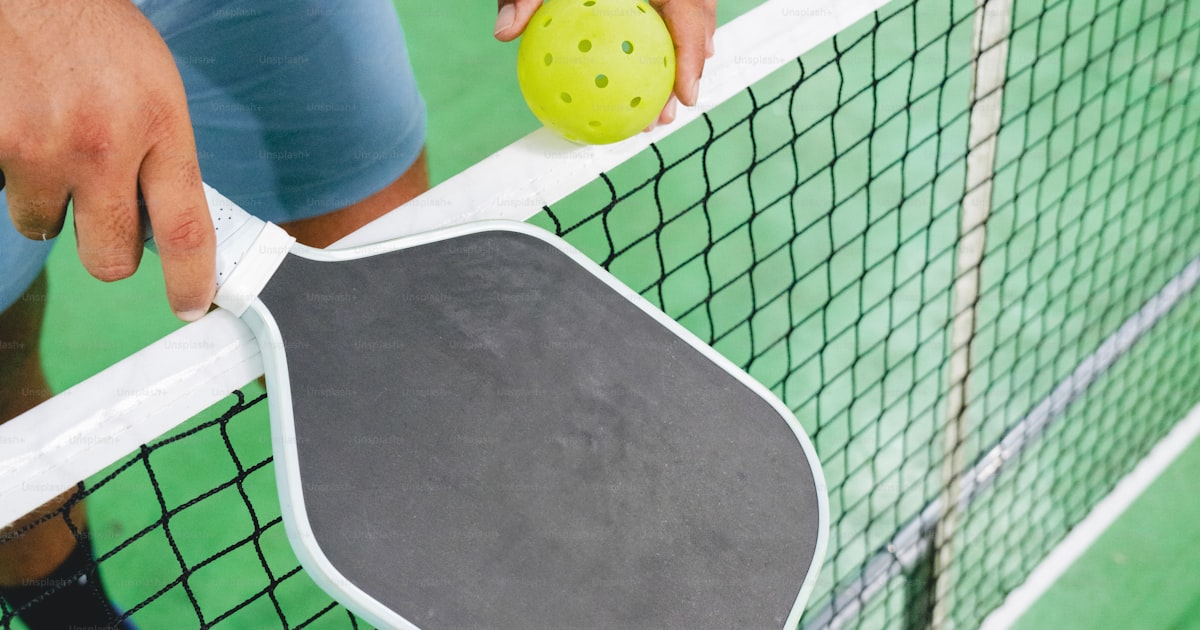
The Erne and the shake-and-bake are two of pickleball's most visually exciting plays. They're also two of the most over-used at the rec level. Let's unpack what they actually are, when they work, and when you should leave them in the toolbox.
What is an Erne, legally
The Erne (named after pro Erne Perry) exploits a quirk in the non-volley zone rule. The kitchen rule says you can't volley a ball while standing inside the kitchen. But the kitchen is only the area between the sidelines, in front of the net, on the court. The space outside the sideline isn't the kitchen.
So if you can position yourself outside the sideline (either by jumping over the kitchen corner or by stepping around it before the dink), you can volley the dink in mid-air without breaking the rule.
The key constraints:
- You can't have a foot touching inside the kitchen at contact.
- You can't have momentum carry you into the kitchen after the volley (the lessons file's "momentum into the kitchen" rule applies).
- You must time the jump or step before the ball is dinked — otherwise you're standing in the kitchen at contact.
When done right, the Erne intercepts what the opponent thinks is a safe cross-court dink, and you volley it hard back at their feet or body.
When to Erne
The Erne works against predictable dinkers. Three setup signs:
- Your opponent has dinked to the same corner three times in a row. They're in a rhythm. Anticipate the next one and Erne.
- You can see their paddle face is closed before they hit. A closed face produces a straight or near-straight dink. If you're on that side, take the risk.
- Their partner has just dinked cross-court. Many players reflexively respond with a cross-court dink. If you're on the cross-court side, anticipate.
Don't Erne against a varied dinker. They'll burn you with a higher dink to your previous position.
The shake-and-bake setup
The shake-and-bake is a two-player coordinated attack. The pattern:
- Both teams have settled into the kitchen. Standard dink rally has been going.
- Partner A (you) takes a slightly higher dink. Instead of dinking back, you drive it — hard, low, at the opponents.
- Partner B (your partner) reads your drive and crashes the kitchen line aggressively. They anticipate the opponents will pop up the drive (because drives are hard to control low-and-back).
- Partner B volleys the popup for a put-away.
The "shake" is the drive. The "bake" is the crash + volley.
The whole sequence relies on:
- Your drive being controlled enough to land in
- Your partner reading the drive instantly
- The opponents popping up the drive (likely if they're at the kitchen and the drive is heading at their chest)
If any of those fails, the play falls apart.
When NOT to use either
Three situations where both plays are wrong:
- You're playing a varied opponent. Both plays reward predictability. If your opponent mixes dink heights and angles, the Erne fails and the drive gets countered.
- You're already behind in the game. Risky plays compound risk. When you're down, play the high-percentage shot, not the trick shot.
- You're tired. Both plays require precise timing. Tired bodies miss timing. At the end of a long match, default to fundamentals.
Combining them
A few advanced players combine the two — drive the third shot to set up a partner Erne on the cross-court counter. This is a 5.0+ play. Don't try it until you're routinely winning at 4.0.
For the rules underlying the kitchen play, the kitchen rules post is the foundation. For more on the dink rally that sets up these plays, see dinking fundamentals. The glossary defines the shot terminology. And the USA Pickleball non-volley-zone rule is the authoritative source for the rule that the Erne exploits.
Frequently asked questions
+Is the Erne legal?
Yes. You can move outside the sideline (either by jumping over the kitchen corner or by stepping around it) and volley a dink as long as you're not standing in the kitchen when you make contact. The rule the Erne exploits is that the non-volley zone is only the area inside the kitchen lines on the court — outside the sideline is fair game.
+Where do you stand for an Erne?
Position yourself near the kitchen corner. When you read that the opponent is going to dink straight back to that side, jump or step around the kitchen line on the outside of the court, intercept the dink at chest or paddle-face height, and volley it back hard.
+What's a shake-and-bake?
A coordinated two-player attack. Partner A drives a hard third shot. Partner B (who's at or near the kitchen line) reads the drive, anticipates a weak return, and crashes forward to volley-attack the return. The 'shake' is the drive; the 'bake' is the volley.
+When do you NOT try an Erne?
When your opponent isn't predictable. Ernes work because the opponent thinks they're dinking into safety. If they suspect an Erne, they'll dink wider or higher and burn you. Use it sparingly — twice per match max at pro level.
+When does the shake-and-bake fail?
When the drive is loose. A drive that goes long or wide gives the opposing team an easy counter. The partner who crashed forward is now caught in no-man's-land between the kitchen and the baseline. Discipline the drive first; only then trust the crash.