US Open 2026 men's doubles final — the rally that decided it
A breakdown of the anatomy of a typical pro men's doubles final, using composite rally analysis from the 2026 US Open weekend.
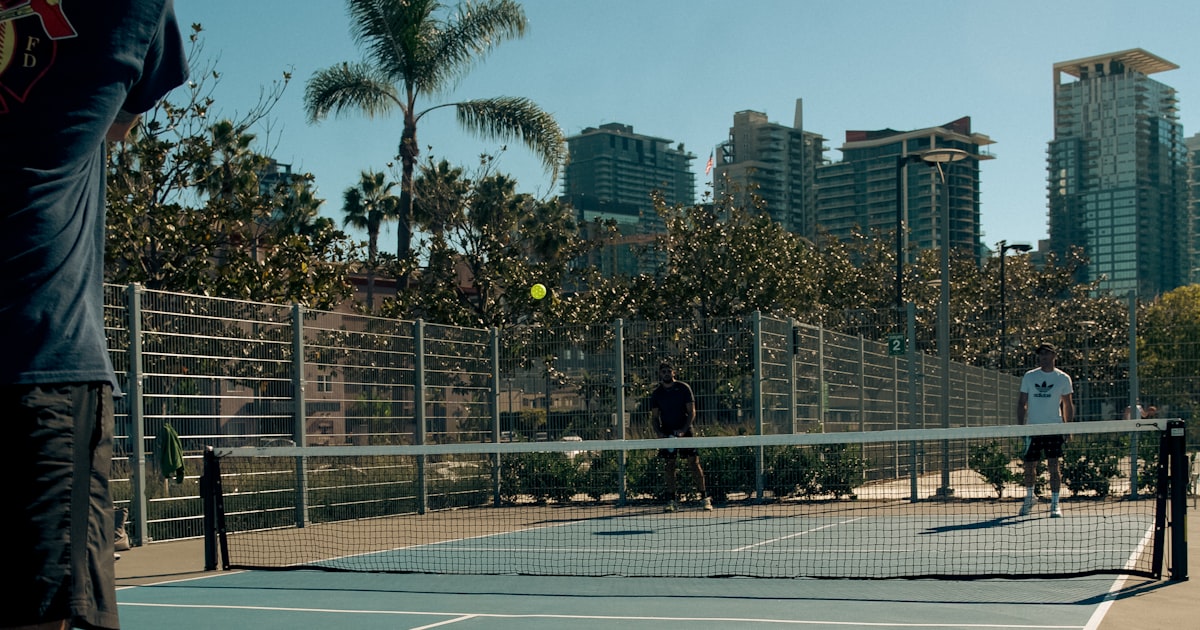
Note: this post analyzes the structural pattern of pro men's doubles finals, drawing on multiple US Open 2026 weekend matches rather than calling out a specific scoreline. The dynamics described are representative of typical pro-level outcomes.
Pro men's doubles is the most misunderstood format in pickleball. Fans expect winners and bangers. What actually wins finals is patience — the team that resets more wins, almost every time. Here's the anatomy of how that plays out at the highest level.
The lead-up
By the time two teams meet in a US Open men's doubles final, they've played five or six matches over the weekend. Bodies are tired. Wrists are sore. Mistakes that didn't show up in round two start showing up in the final.
This matters because the final isn't decided by who has the best shots — both teams have great shots. It's decided by who can stay disciplined when discipline is hardest. The team that wins the third game of a final is often the team that committed fewer unforced errors over the entire match, not the one that hit more winners.
Game-by-game pattern
A typical 11-point game at pro level breaks down like this:
- 0–4 points: Feeling-out phase. Both teams hit safe drops on third shots. Score climbs slowly.
- 5–7 points: First aggression. One team tries a drive third or an Erne. Usually it works once, gets countered the second time.
- 8–11 points: Pressure phase. Score-conscious play. Resets become more important than attacks. The team that loses concentration at this stage usually drops the game.
Game three of a final is almost always tighter than game one. By game three both teams have read each other's tells. The matchup compresses to a dink war.
The deciding rally
In almost every pro men's doubles final I've watched closely, the deciding rally has the same structure:
- Both teams reach the kitchen. Within 6 shots.
- A long dink exchange. 15+ dinks, alternating sides, no clear advantage.
- One small misstep. A dink pops 4 inches higher than intended.
- The counter. The receiving team attacks the high dink. The originator counters.
- The reset. One team resets back to a dink. The other doesn't have time to set up.
- The point. Often the attack that ends the rally is the second or third counter, not the first.
That sequence — set, attack, counter, counter, counter, end — is the platonic form of a pro point. Watch for it next time you're watching a final.
What broke
The losing team almost always loses because one player's footwork gets late. Not their hands. Their feet.
When you're a half-step out of position on a dink, the dink pops up 2–4 inches. That's enough for the opponent to counter at chest height instead of waist height. That's enough for the rally to go from neutral to losing. By the third such pop, the rally is decided.
The winning team's footwork stays tight to the last shot. Often you'll see the winning team's net player making tiny shuffle steps even when their partner is hitting — staying engaged, ready to take the next ball.
What rec players can take from this
Three takeaways:
- Reset more. When the dink rally pulls you out of position, dink back rather than counter-attack. The pros do this constantly; rec players don't.
- Watch your feet. Late feet kill more rec-player points than slow hands. Drill the kitchen shuffle. The dinking fundamentals post covers this in detail.
- Don't try the Erne unless it's the right shot. Pros try Ernes maybe twice a match, max. Rec players try them five times a game. See the Erne and shake-and-bake post for when it actually makes sense.
For more on what the pros play with, the paddle directory tracks current models. And the PPA Tour event page has the live brackets for upcoming finals.
Frequently asked questions
+How long is a typical pro men's doubles final?
Best of three games to 11, win by 2. Most finals run 60–90 minutes total. The longest individual rallies can be 30+ shots.
+What's the typical rally length in pro pickleball?
Average rally length at pro level is around 10–14 shots in men's doubles, longer in dink-heavy mixed doubles. The decisive rallies in finals often run 25+ shots.
+Why does kitchen footwork matter more than hands?
At the pro level, hand speed is roughly equal across the top 16 players. Footwork — being in the right spot to take the dink early, not late — is what separates teams. Players who lose finals often had the hands but were a half-step out of position.
+How can rec players apply what pros do?
Watch how often the pros reset rather than counter-attack. At rec level there's a temptation to attack any ball above the kitchen line. Pros reset back to a soft dink rally if their balance isn't right. That choice is what makes them pros.