The reset shot: how to neutralize a speed-up without popping it up
How to hit a reset shot in pickleball — the grip, footwork, and above-shoulder adjustments that keep a hard speed-up from becoming an easy putaway for your opponent.
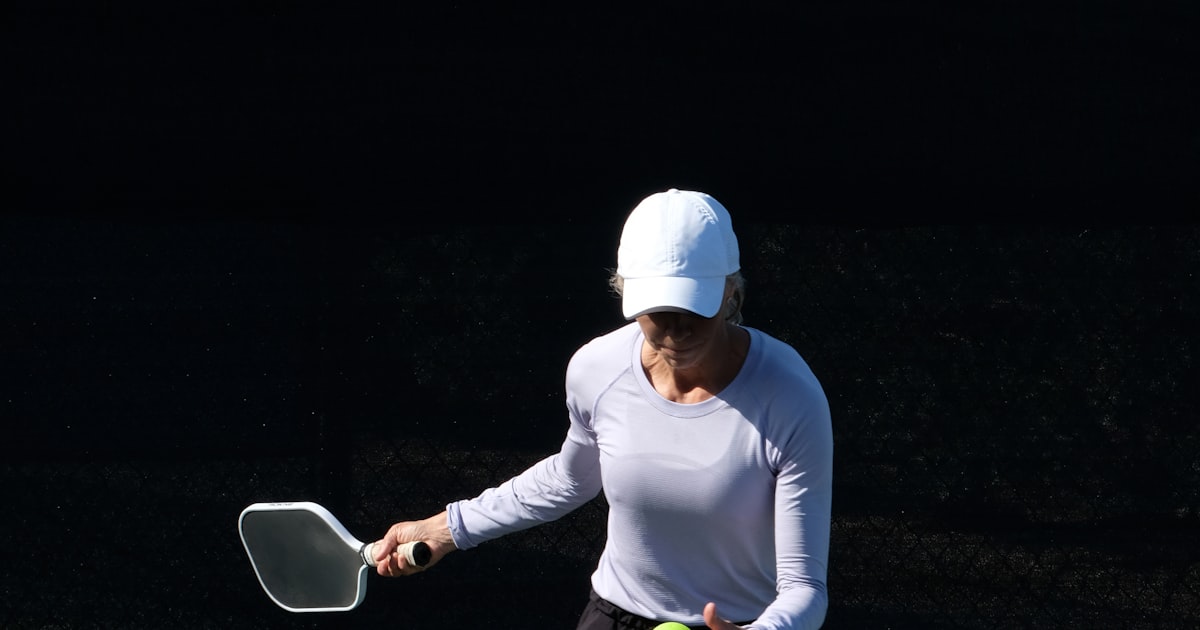
Someone at the kitchen line rips a speed-up at your chest. You flinch, your paddle jerks back, and the ball rockets off your face — long, or worse, sitting up in the middle of the court for an easy put-away. That's the moment the reset shot exists to fix. Here's how to actually hit one.
What is a reset shot (and how it differs from a block)
A reset takes a hard, fast ball — a drive or a "speed-up" — and kills its pace, sending it back soft and low into the opponent's kitchen. Because it lands short and slow, it can't be attacked again. The rally resets to a neutral dinking exchange, which is exactly what the name implies.
A block is related but different: you get the paddle in front of the ball and survive the exchange, but some incoming pace can still carry back at your opponent. A block is reactive triage. A reset is a deliberate kill shot on the ball's energy — the goal isn't just to get the ball back, it's to make sure the ball that comes back is unattackable.
The grip mistake that ruins most resets
If you only fix one thing about your reset, fix this: you're probably gripping too tight.
When a ball is flying at you fast, the instinct is to brace — grip harder, like you're about to block a punch. But a firm grip turns your paddle into a wall. A wall doesn't absorb energy, it reflects it. Grip hard against a speed-up and that incoming pace transfers straight back into the ball, sending your reset flying long or popping it up into an easy counter-attack.
The fix is almost the opposite of instinct: loosen your grip in the instant before contact. Think of the paddle as a pillow, not a wall — meant to absorb energy, not fight it. At contact, your grip should be loose enough to feel the ball's vibration travel up the handle into your hand. If you don't feel it, you're gripping too hard. It's a hard habit to build, since everything about a fast incoming ball tells your nervous system to tense up — drilling it consciously is the only way it becomes automatic under real pressure.
Handling speed-ups above the shoulder
Speed-ups don't always arrive at a comfortable height. When a ball comes in above your shoulder, resist the temptation to take a real backswing and drive it back — treat aggression with more aggression and you'll usually miss.
For a shoulder-high or higher speed-up, use a short, controlled block with a slightly closed paddle face. No backswing, no follow-through — present the paddle and let the ball's own momentum, combined with the closed angle, direct it downward into the kitchen. A closed face means the top edge tilts slightly forward, toward the net; that small tilt turns incoming energy into downward trajectory instead of a flat return that sails long. Practice the shape in slow motion first: hold the angle, present the paddle, don't let your arm add extra force. The angle does the work, not the swing.
Footwork: stop before you hit
The other half of a clean reset has nothing to do with your hands — it's your feet. Stop your feet before contact. A reset hit while you're still moving — shuffling sideways, stepping back, leaning away from the ball — is far harder to control than one hit from a planted, stable base.
Your body's momentum leaks into the shot. Moving backward at contact adds to whatever grip error you're already fighting, and the ball is more likely to sail long. Moving forward or sideways makes your paddle angle inconsistent. The fix is simple to state, hard to execute under pressure: when a speed-up is coming, get your feet set — even a smaller, faster step than feels natural — before you bring the paddle to the ball.
Drills to groove the reset
Work through these in order, each isolating a different piece before you put it all together.
Drill 1 — Grip-pressure resets. Partner feeds hard drives from the baseline or mid-court while you're at the kitchen line. Your only job is grip pressure: catch every ball loose and land it soft in the kitchen. Goal: 15 in a row without popping up.
Drill 2 — Add footwork. Same setup, but the feed varies so you take a small step or shuffle before each ball arrives. Plant your feet before contact every time — if you catch yourself resetting while still moving, reset the count. Goal: 15 in a row with your feet stopped at contact.
Drill 3 — Above-shoulder feeds. Partner mixes in feeds above shoulder height with normal-height drives. Use the closed-face block on the high ones, the full reset on the rest — this forces a split-second read on ball height before you commit to a shape. Goal: 10 in a row across both.
A common mistake is skipping straight to drill 3. The grip-pressure fix has to become automatic first — piling footwork and height variation on top of a grip you're still consciously fighting just overloads you.
Why this shot matters more than it looks
A reset rarely gets highlighted — nobody replays a reset the way they replay a smash. But above 3.5, the players who consistently survive speed-ups without giving up an easy point are the ones controlling the flow of the game. A reset isn't meant to win the point outright — it's meant to take away your opponent's advantage and get the rally back to a neutral dink exchange, where patience decides the outcome instead of raw pace.
For the neutral exchange a good reset buys you time to get back to, see dinking fundamentals. If your opponent starts speeding up dinks that sit up too long, the erne and the shake-and-bake covers the aggressive counters on the other side of that mistake. And if you're unsure exactly where a reset legally has to land, kitchen rules, explained covers the non-volley zone boundaries in full.
Frequently asked questions
+What's the difference between a reset and a block?
A block can still send some pace back at the opponent — it's a firmer, more reactive shot. A reset actively takes the pace off the ball, redirecting it soft and low into the kitchen so it can't be attacked again. A block survives the moment; a reset ends the aggression.
+Why does my reset fly long or pop up?
Almost always grip pressure. Gripping tightly at contact transfers the incoming pace straight back into the ball instead of absorbing it. Consciously loosen your grip in the split second before contact — you want to feel the paddle vibrate in your hand, not fight the incoming ball.
+What do I do with a speed-up above my shoulders?
Don't take a backswing. Use a short, controlled block with a slightly closed paddle face and let the ball's own pace carry it downward into the kitchen. Any real swing on a shoulder-high ball turns your paddle face into a launch ramp for a popup.
+Why do coaches say to stop your feet before resetting?
Because a paddle is far harder to control while your body is still moving. Momentum you can't fully cancel at contact leaks into the shot as extra pace or an inconsistent angle — exactly what turns a reset into a popup. Plant, absorb, redirect.
+Is a reset shot the same as a drop shot?
No. A drop shot is a shaped, offensive shot you choose to hit off a slow ball, with time to set your feet and swing through it. A reset is reactive — a defensive shot against a fast ball where your only goal is survival: kill the pace and get the rally back to neutral.